

Pairing Coffee with Your Restaurant’s Cuisine
Coffee isn’t just a morning pick-me-up or an afternoon delight; it’s a versatile beverage that can enhance your restaurant’s dining experience in surprising ways. Pairing the right coffee with your menu can elevate flavors, create memorable moments, and even drive repeat business. Here’s how you can master the art of coffee and cuisine pairing to delight your customers and make your restaurant stand out.
Understanding Coffee Flavors
Before diving into pairings, it’s crucial to understand the diverse flavor profiles of coffee. Coffee beans can exhibit a range of tastes, from fruity and floral to nutty and chocolatey, depending on their origin and roasting process. A light roast, for example, often has bright, acidic notes with hints of citrus or berries, making it an excellent match for desserts or light, fruity dishes. Dark roasts, on the other hand, have deeper, more robust flavors like chocolate, caramel, or even smokey undertones, which pair beautifully with rich, savory meals or decadent desserts.
By understanding these flavor profiles, you can start to see how different coffees might complement your restaurant’s cuisine. Imagine a zesty lemon tart paired with a bright Ethiopian Yirgacheffe coffee, where the citrus notes of the coffee enhance the tartness of the dessert. Or consider a hearty beef stew served with a bold, dark roast Sumatra, where the coffee’s deep flavors mirror the stew’s richness.
Breakfast and Brunch Pairings
Breakfast and brunch are prime times to introduce customers to the magic of coffee pairings. If your menu includes classic breakfast items like pancakes, waffles, or French toast, consider pairing these with a medium roast Colombian coffee. The smooth, balanced flavor with hints of caramel and nuts will complement the sweetness of these dishes without overwhelming them.
For a more savory brunch offering like eggs benedict or a spinach and feta omelette, try pairing with a Guatemalan coffee. Guatemalan coffees often have a balanced acidity and a complex flavor profile, including notes of chocolate and spice, which can add an interesting contrast to the richness of egg dishes. Don’t forget about cold brew for brunch, especially during warmer months. A cold brew’s smooth, less acidic profile pairs well with spicy breakfast items like chorizo and eggs, cooling down the palate and refreshing your guests.
Lunch and Dinner Pairings
Lunch and dinner provide even more opportunities for creative coffee pairings. For lighter fare like salads or grilled fish, consider a light roast coffee with floral or fruity notes. A Kenyan AA, with its bright acidity and hints of berry and citrus, can elevate the flavors of a grilled salmon salad, bringing out the freshness of the fish and the crispness of the greens.
Heavier, more savory dishes like steak or pasta with a rich sauce call for a coffee that can hold its own. A full-bodied dark roast, such as an Italian roast or a French roast, with its deep, smokey flavors and velvety mouthfeel, pairs wonderfully with a juicy ribeye or a creamy Alfredo pasta. The coffee’s intensity matches the richness of the dish, creating a harmonious balance that’s sure to impress.
Dessert Pairings
When it comes to dessert, coffee can be both a complementary beverage and a flavor enhancer. For chocolate-based desserts like a decadent chocolate mousse or a classic brownie, a dark roast coffee with chocolate undertones is a perfect match. An Ethiopian Harrar, known for its rich, chocolatey flavors, will amplify the chocolate in the dessert, creating a luxurious experience for your guests.
For fruit-based desserts like a berry tart or a lemon meringue pie, consider a light roast coffee with bright, fruity notes. A Panama Geisha, with its delicate floral and citrus flavors, can highlight the freshness of the fruit, providing a delightful contrast to the sweetness of the dessert. Cheesecake lovers can enjoy a medium roast coffee with nutty and caramel notes, such as a Brazilian Santos, which complements the creamy texture and rich flavor of the cheesecake without overpowering it.
Specialty Coffee Pairings
Don’t forget about specialty coffee drinks when considering pairings. A cappuccino or latte, with its creamy texture and mild coffee flavor, can pair wonderfully with a variety of dishes. For example, a vanilla latte can enhance the flavors of a spiced carrot cake, while a cappuccino can balance the sweetness of a cinnamon roll with its rich, frothy milk and espresso base.
Experimenting with flavored coffees can also yield delightful results. A hazelnut coffee, with its nutty aroma and sweet undertones, can complement a slice of pecan pie, enhancing the nutty flavors and adding an extra layer of indulgence. Meanwhile, a peppermint mocha can be a festive pairing for holiday treats like gingerbread cookies or a slice of yule log cake.
Tips for Successful Pairings
When creating coffee and cuisine pairings, keep a few tips in mind. First, consider the intensity of both the coffee and the dish. Pair bold flavors with bold flavors, and lighter flavors with lighter ones, to avoid one overpowering the other. Second, think about complementary flavors – match similar notes in the coffee and the food to create a harmonious pairing. Finally, don’t be afraid to experiment and get feedback from your customers. Their responses can help you fine-tune your pairings and discover new combinations that work beautifully together.
Pairing coffee with your restaurant’s cuisine can transform an ordinary meal into an extraordinary dining experience. By understanding coffee flavors, experimenting with pairings, and considering your customers’ preferences, you can create a menu that delights and surprises. So next time you brew a pot of coffee, think about how it might complement the dishes you’re serving and elevate your restaurant’s culinary offerings.
Crafting Seasonal Coffee Specials: A Delight for Your Taste Buds
Embrace the Seasons with Fresh Ingredients
Crafting seasonal coffee specials is an art that can bring a delightful twist to your daily brew. You can embrace the changing seasons by incorporating fresh, seasonal ingredients into your coffee creations. Think about the rich, warm spices of autumn, the refreshing mint of winter, the floral notes of spring, and the fruity freshness of summer. Using these ingredients not only enhances the flavor of your coffee but also adds a unique touch that makes each cup special.
For example, in autumn, you might want to create a pumpkin spice latte that captures the essence of fall. Use real pumpkin puree, a dash of cinnamon, nutmeg, and cloves to create a comforting, warm beverage that feels like a cozy hug in a cup. Your customers will love the nostalgic flavors that remind them of pumpkin pies and crisp, cool days.
Experiment with Flavors and Combinations
Don’t be afraid to experiment with different flavors and combinations. This is your chance to get creative and think outside the box. You might discover a new favorite that becomes a signature drink at your coffee shop or a beloved part of your home coffee routine.
In winter, why not try a peppermint mocha? The combination of rich chocolate and refreshing peppermint can lift your spirits on even the coldest days. Use peppermint extract or crush up candy canes for a festive touch. A sprinkle of cocoa powder or chocolate shavings on top can add that extra bit of indulgence.
Spring is all about light, fresh flavors. Consider a lavender honey latte that brings the delicate floral notes of lavender together with the sweetness of honey. Brew your coffee as usual, then add a lavender-infused simple syrup and a drizzle of honey. The result is a beautifully balanced beverage that’s perfect for sipping as you watch the flowers bloom.
Highlighting Summer’s Best
When summer rolls around, it’s time to take advantage of all the fresh fruits and cooling flavors. A berry iced coffee can be a refreshing way to beat the heat. Blend fresh berries with your coffee and a splash of milk, then pour over ice. The result is a vibrant, fruity coffee that’s both refreshing and energizing.
Another great summer option is a coconut cold brew. Cold brew coffee is already a great way to enjoy coffee on hot days, but adding coconut milk and a touch of vanilla can take it to the next level. The creamy coconut milk pairs beautifully with the smooth, rich flavor of cold brew, creating a tropical treat that transports you to a beachside paradise.
Engage Your Customers with Unique Experiences
Creating seasonal coffee specials is also a fantastic way to engage your customers and give them something to look forward to. You can create anticipation by teasing your upcoming seasonal drinks on social media or in your café. Share behind-the-scenes looks at your process, from selecting the ingredients to perfecting the recipes.
Encourage your customers to share their own photos and experiences with your seasonal specials. Create a unique hashtag for each season or special drink, and offer incentives for customers who participate. This not only boosts your engagement but also creates a sense of community and excitement around your brand.
Keep It Simple and Fun
Remember, crafting seasonal coffee specials doesn’t have to be complicated. Sometimes, the simplest ideas are the best. Focus on high-quality ingredients and balanced flavors, and you can’t go wrong. Plus, keeping it simple means you can quickly adapt to new trends or customer feedback.
For example, a simple cinnamon vanilla latte can be a hit during the cooler months. Brew your coffee, steam some milk, and add a dash of cinnamon and vanilla extract. Top with a sprinkle of cinnamon, and you have a deliciously cozy drink that’s easy to make and enjoy.
In summer, a classic iced caramel macchiato can be a real crowd-pleaser. Layer cold milk, ice, and a shot of espresso, then drizzle with caramel sauce. The result is a sweet, creamy drink that’s perfect for sipping on a hot day.
Get Inspired and Stay Creative
To keep your seasonal coffee specials fresh and exciting, always be on the lookout for new inspiration. Attend coffee festivals, follow coffee influencers, and experiment with different recipes. The world of coffee is vast and diverse, with endless possibilities for creativity.
You might find inspiration in unexpected places, like a dessert you tried at a restaurant or a flavor combination you encountered while traveling. Keep a notebook or digital file where you jot down ideas as they come to you. This way, you’ll always have a treasure trove of inspiration to draw from when it’s time to create your next seasonal special.
Training Staff for Coffee Excellence
Understanding the Basics
Training your staff to excel in coffee preparation starts with understanding the basics. You need to ensure that every team member knows the fundamental principles of brewing a perfect cup of coffee. This includes learning about different types of coffee beans, the importance of water quality, and the science behind extraction. By grasping these essentials, your staff will be able to create consistently delicious coffee that your customers will love. Start with simple techniques and gradually introduce more complex concepts as their confidence and skills grow. Remember, a solid foundation is key to mastering any craft.
Mastering Coffee Machines
Every great coffee shop has a range of coffee machines that need to be expertly operated. Training your staff to master these machines is crucial. Spend time teaching them how to use each machine correctly, whether it’s a classic espresso machine, a modern drip coffee maker, or a high-tech cold brew system. You can even include hands-on training sessions where they can practice making different types of coffee. This not only helps them become more proficient but also boosts their confidence. The goal is to make sure they feel comfortable and skilled in using all the equipment, ensuring a seamless operation during busy hours.
Perfecting the Art of Espresso
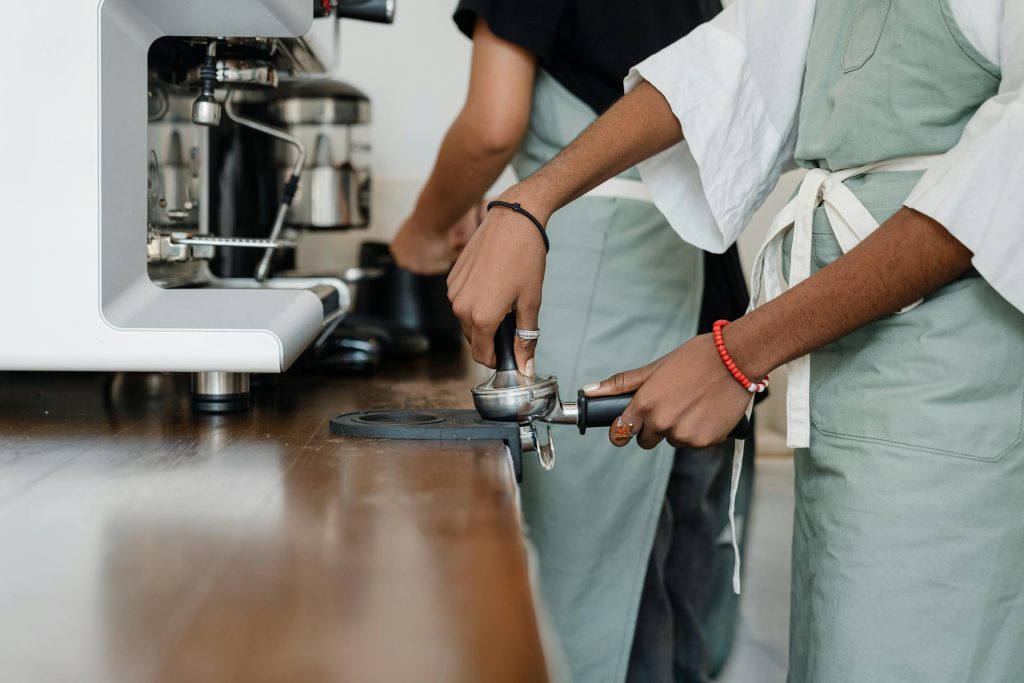
Espresso is the heart of many popular coffee drinks, so it’s vital for your staff to perfect this art. Start by teaching them how to grind coffee beans to the right consistency. The grind size can significantly affect the taste of the espresso. Then, move on to tamping techniques, ensuring that the coffee grounds are evenly compressed. This helps with even extraction and a balanced flavor. Practice pulling shots of espresso, focusing on timing and pressure to achieve the perfect shot. By mastering these steps, your staff can create rich, flavorful espresso that serves as the base for lattes, cappuccinos, and other specialty drinks.
Steaming and Frothing Milk
Many coffee drinks involve steamed or frothed milk, so this is another important skill for your staff to learn. Begin with the basics of milk chemistry and the different types of milk your café uses. Demonstrate how to steam milk to the right temperature, creating a creamy texture without burning it. Show them how to froth milk to achieve the perfect microfoam for lattes and cappuccinos. Practice makes perfect, so encourage your team to experiment and find their own techniques. Good milk frothing can enhance the texture and taste of your coffee drinks, making them more enjoyable for your customers.
Creating Latte Art
Once your staff is comfortable with steaming and frothing milk, introduce them to the world of latte art. This skill adds a touch of creativity and flair to your coffee drinks. Start with simple designs like hearts and rosettas, gradually progressing to more complex patterns. Provide plenty of practice time and encourage experimentation. Remember, patience and perseverance are key. Latte art not only makes the coffee look appealing but also shows your customers that your staff cares about their craft. It’s a small detail that can make a big difference in customer satisfaction.
Knowledge of Coffee Varieties
Having a knowledgeable staff can set your coffee shop apart from the competition. Train your team to understand different coffee varieties and their unique flavor profiles. Teach them about single-origin coffees, blends, and the specific characteristics of beans from various regions. This knowledge allows them to make informed recommendations to customers, enhancing the overall experience. Encourage your staff to taste different coffees and share their observations. This not only improves their skills but also fosters a deeper appreciation for the diversity of coffee.
Customer Service Excellence
Great coffee is important, but excellent customer service is equally crucial. Train your staff to engage with customers, providing a welcoming and friendly atmosphere. Teach them to ask the right questions to understand customer preferences and make personalized recommendations. Emphasize the importance of listening and responding to feedback. A happy customer is likely to become a repeat customer, so make sure your team knows how to create positive interactions. Role-playing different scenarios can be a fun and effective way to practice customer service skills.
Continuous Learning and Improvement
The coffee industry is constantly evolving, so it’s essential for your staff to stay updated with the latest trends and techniques. Encourage continuous learning by providing resources such as books, online courses, and workshops. You can also invite guest baristas or coffee experts to conduct training sessions. Creating a culture of continuous improvement keeps your team motivated and excited about their work. Regularly review their performance and provide constructive feedback to help them grow. Remember, a well-trained and knowledgeable staff is the backbone of a successful coffee shop.
Building Team Spirit
Training is not just about individual skills; it’s also about building a cohesive team. Encourage collaboration and knowledge-sharing among your staff. Organize team-building activities and create opportunities for them to bond outside of work. A strong team spirit fosters a positive work environment, which translates to better service for your customers. Recognize and celebrate achievements, whether it’s mastering a new skill or receiving positive feedback from a customer. A happy and motivated team is more likely to deliver an excellent coffee experience consistently.
Training your staff for coffee excellence is an ongoing process that requires dedication, patience, and a genuine passion for coffee. By investing in their development and creating a supportive environment, you can ensure that your coffee shop stands out for its exceptional coffee and outstanding service.
Discover the World of Specialty Coffee Beans
If you’re a coffee enthusiast, you’ve probably heard the term “specialty coffee beans” thrown around a lot. But what does it actually mean, and why should you care? Specialty coffee beans are high-quality beans that are graded 80 points or above on a 100-point scale by a certified coffee taster (known as a Q Grader). They’re grown in ideal conditions, harvested at peak ripeness, and processed with care. The result? A cup of coffee with exceptional flavor, aroma, and character that you won’t find in your average brew.
Understanding the Unique Characteristics
Specialty coffee beans come from specific regions known for their optimal growing conditions, such as Ethiopia, Colombia, and Kenya. Each region imparts unique characteristics to the beans, influenced by factors like soil composition, altitude, and climate. For instance, Ethiopian beans often have fruity and floral notes, while Colombian beans are known for their balanced sweetness and nutty undertones. By exploring specialty coffee beans, you’ll embark on a journey through a diverse world of flavors that reflect the beans’ origins.
How to Choose the Best Beans
Choosing the best specialty coffee beans might seem overwhelming at first, but it’s all about personal preference. Start by considering the flavor profiles you enjoy. Do you prefer a bright and acidic cup with fruity notes, or a rich, chocolatey brew with low acidity? Once you know your taste preferences, you can look for beans from regions known for producing those flavors. Don’t be afraid to experiment with different beans and roasts to find your perfect match. Specialty coffee is all about discovering what you love.
The Importance of Freshness
When it comes to specialty coffee beans, freshness is key. Coffee beans start to lose their flavor and aroma soon after they’re roasted, so it’s important to buy beans that are as fresh as possible. Look for roasters who date their bags, and aim to use the beans within two to three weeks of the roast date for the best experience. Grinding your beans just before brewing also helps preserve their freshness and brings out the full spectrum of flavors in your cup.
Brewing Methods for Specialty Beans
Specialty coffee beans shine the brightest when brewed with care. Different brewing methods can highlight various aspects of the beans’ flavors. For a clean, bright cup, try using a pour-over method like the Chemex or Hario V60. These methods emphasize the beans’ subtle notes and acidity. If you prefer a fuller-bodied coffee, a French press or Aeropress might be more to your liking, as they extract more oils and solids from the beans. Experimenting with different brewing methods can be a fun way to experience the full potential of your specialty coffee beans.
Pairing Beans with Brew Methods
Matching the right brewing method with your specialty coffee beans can elevate your coffee experience to new heights. Light roast beans, with their complex, delicate flavors, often perform best with pour-over methods that allow for precise control over brewing variables. Medium roast beans, which have a balance of acidity and body, are versatile and can be brewed successfully with a variety of methods, including drip machines and AeroPress. Dark roast beans, with their bold, robust flavors, tend to shine in espresso or French press, where their full-bodied nature can be fully appreciated.
Experimentation: The Spice of Coffee Life
One of the joys of specialty coffee is the endless opportunity for experimentation. Try blending different beans to create your own unique flavor profiles. Mix a bright, fruity Ethiopian bean with a rich, chocolatey Brazilian bean to see how their flavors interact. Play around with different grind sizes and brewing times to find the perfect balance for your palate. Specialty coffee is all about the journey of discovery, and there are no wrong answers – just delicious possibilities.
Supporting Sustainable Practices
By choosing specialty coffee beans, you’re also supporting sustainable and ethical practices in the coffee industry. Specialty coffee is often grown by small-scale farmers who use environmentally friendly methods and receive fair compensation for their hard work. Many specialty coffee roasters are committed to transparency and sustainability, offering beans that are Fair Trade, organic, or direct trade. When you sip a cup of specialty coffee, you can feel good knowing that you’re contributing to a more equitable and sustainable coffee industry.
The Joy of Sharing
Finally, one of the best things about specialty coffee is sharing it with others. Invite friends over for a coffee tasting party where you can compare different beans and brewing methods. Share your favorite discoveries with fellow coffee lovers and introduce them to the world of specialty coffee. Whether you’re a seasoned coffee aficionado or just starting your journey, the joy of specialty coffee is something that’s even better when shared.